

Baking 101
Tips and tricks

This weekend I baked a cake for a friend’s wedding. Nine tiers of chocolate sponge layered with a vanilla Swiss meringue buttercream. Here she is:
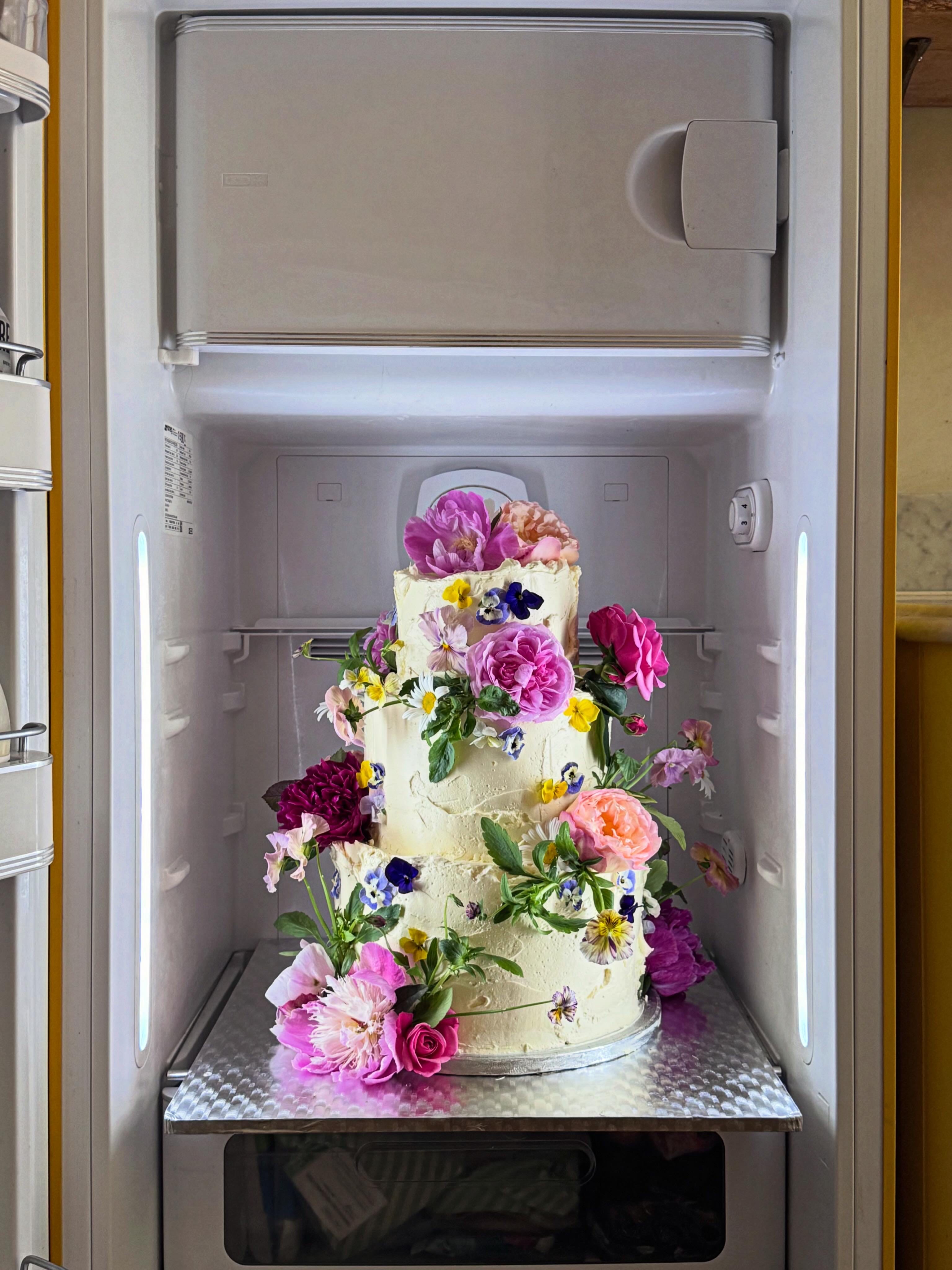
And as I type this, there are four more cakes baking in my oven. Three chocolate cakes (for a friend’s birthday), and an iteration of a sponge cake laced with lemon zest and elderflower, that I’ve been working on the recipe for, for a while now. As much as I like to cook, I love to bake more. Do you like to bake?
I’ve put together a list of baking tips and tricks, a 101 of sorts: lessons I’ve learned over the years (through much trial and error). A list of things I find useful and thought you might too. So, here we go:
These pre-cut parchment paper circles to line your cake tins are a great hack. Obviously if you only ever bake a cake once in a blue moon, you might as well just cut your own circle out of your roll of paper to line the bottom of the tin; but if you’re baking cakes regularly then these will save you a whole heap of time and hassle.
Ideally, keep a pat or two of butter in the fridge and a pat of two at room temperature as well; then you’re ready for all baking scenarios (pastry! buttercream! cake!) at the drop of a hat.
Once you’ve mixed your dry ingredients together with your wet ingredients, you want to get that cake into the oven as quickly as possible - or it won’t rise properly. When you combine baking powder (or soda) with wet ingredients, a chemical reaction occurs and little carbon dioxide bubble form: these are what give your cake that lovely fluffy, airy texture. So, if the batter sits around for too long before it goes into the oven, then the bubbles will go flat and the cake will taste stodgy. Don’t panic, but do move with speed.
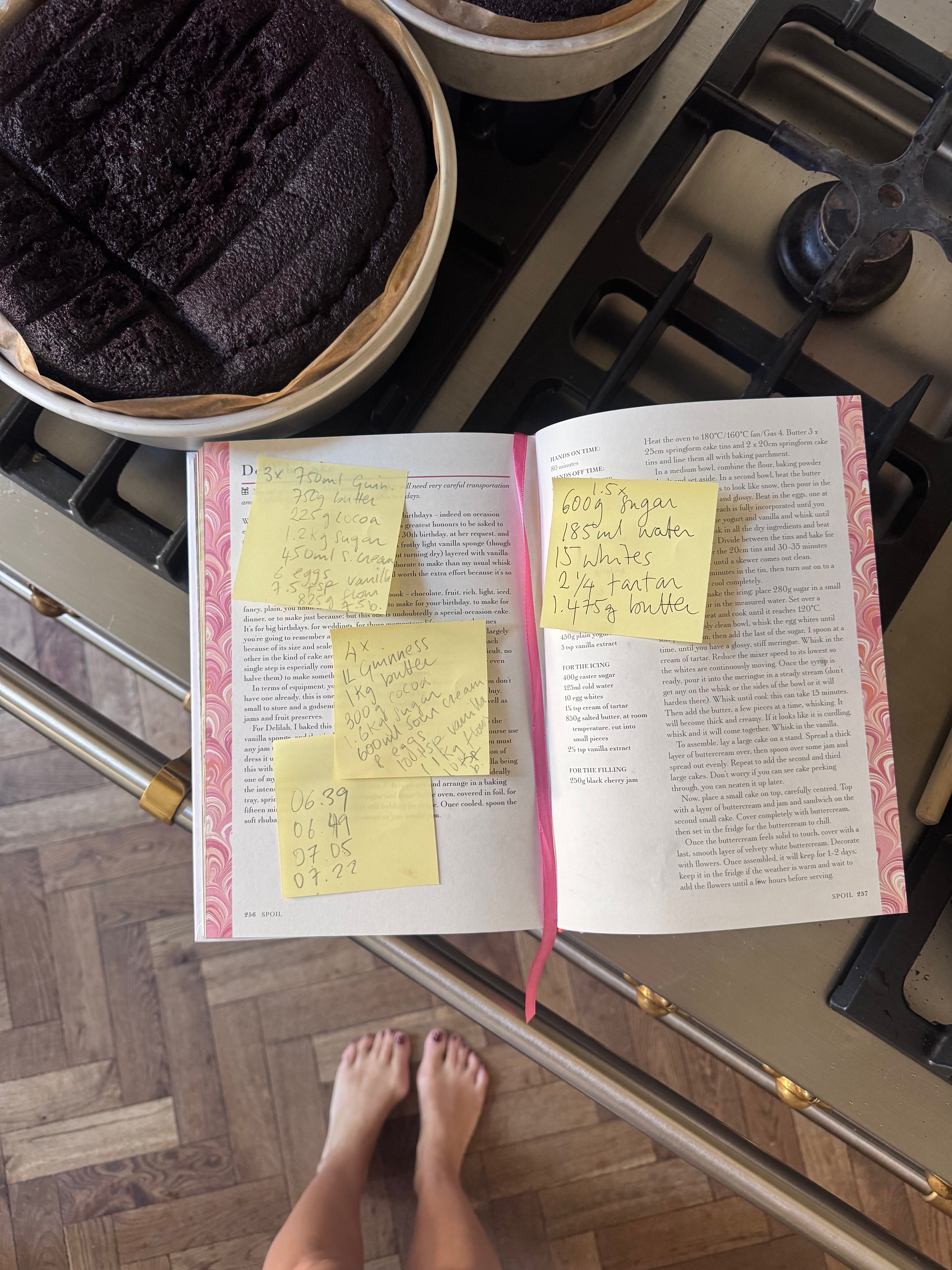
When you scale up (or down) a recipe, take a moment to re-write the ingredients list with your new quantities. I do this either in the notes app on my phone; or, better still, on a post-it note which I stick in the cookbook (quite useful for later reference). You’ll feel like you want to skip this step and just rely on a little mental arithmetic as you go, but then you run the very real risk of getting yourself in a muddle. Trust me: write it all down now.
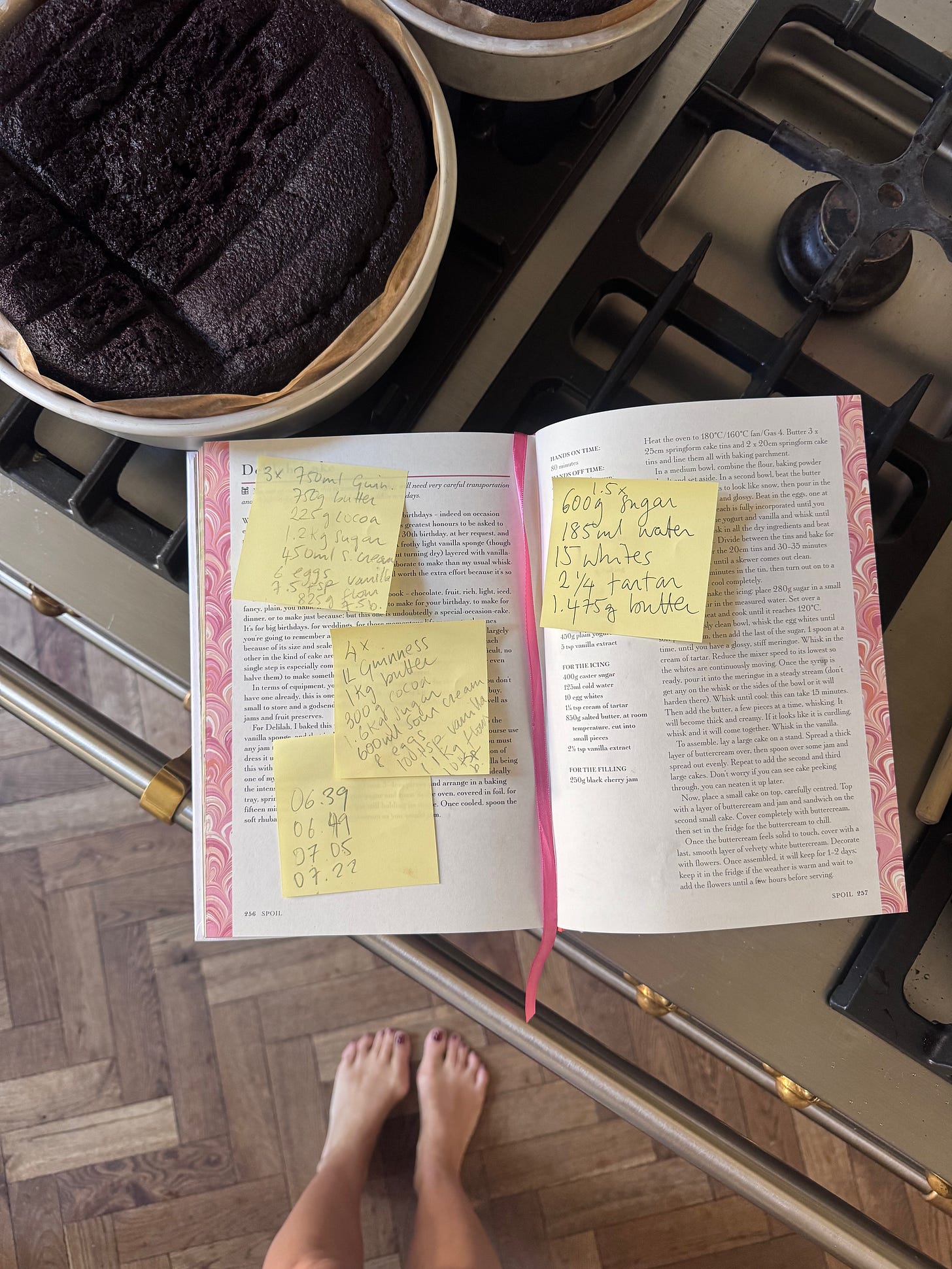
Also, set an alarm on your phone as soon as you put that cake in the oven. I typically set this for 5-10 minutes sooner than the recipe advises, just to allow for erratic oven temperatures and because you can pop the cake back in for a bit longer, but you can’t turn back time if it burns.
The secret to getting a nice crisp bottom on a tart or pie is to set an upturned baking tray in the middle of the oven then crank the oven up as high as the temperature will go, for about 10 minutes or so; then, turn the heat down to where you need it to be, and pop your tart/pie/whatever it is on top of the hot tray to bake. Not even a hint of a soggy bottom.
No one will tell you this, but you don’t need to store buttercream in the fridge; it’s just fine at room temperature (just keep it covered, and ideally somewhere cool and on the darker side). If you do keep it in the fridge, you can bring it back down to room temperature, but it’s a bit of a faff and somehow the texture is never quite the same.
Rub half a lemon over all over the inside of your bowl before you make meringue: this will cut through any grease and make sure that your eggs froth and fluff nicely.
Also: separate your eggs into two small bowls, tipping each white into the larger mixing bowl individually. This way, if you do get a little yolk in there, all is not ruined and lost - just the one egg white.
If you don’t want to separate your eggs, then you can buy just the whites in a bottle like this. This saves on time, effort and waste; but does comes with the caveat that the bottled eggs don’t froth and fluff quite so well as whole eggs. It’s something to do with the whites being pasteurised that affects their consistency: the bottled egg whites work great for a meringue buttercream or a burnished meringue topping, but if you’re making actual meringues you won’t get those nice glossy stiff peaks which - to my mind - is what meringues are really about. And so, I refer you back to points 8 and 9.
If you’re whipping cream in a freestanding mixer, hover over that bowl like a hawk. Don’t look away for even a second, because you can be pretty much guaranteed that the cream will choose that very moment to curdle.
Talking about freestanding mixers, my best kitchen investment of all time has been my Kitchen Aid. I bought it as a housewarming present to myself, when I moved into my first flat, aged 22. I still have it and use it almost daily. I’ve also since invested in a second larger one too, for when I’m making lots of cakes all in one go. No regrets there, either.
Pre-sifted flour is a gift from the baking gods. Make good use of it.
Ready-rolled pastry (puff and shortcrust) is another welcome gift from the baking gods.
If you are, however, making your own pastry from scratch, the only recipe you’ll ever need is this one from Stephanie Alexander’s The Cook’s Companion: 270g plain flour; 200g cold butter; 60ml ice cold water. Blitz the flour and the butter together in a food processor; add the water and keep blitzing until a dough forms; shape into a ball, wrap in clingfilm and rest in the fridge for 30 mins, before rolling out to use.
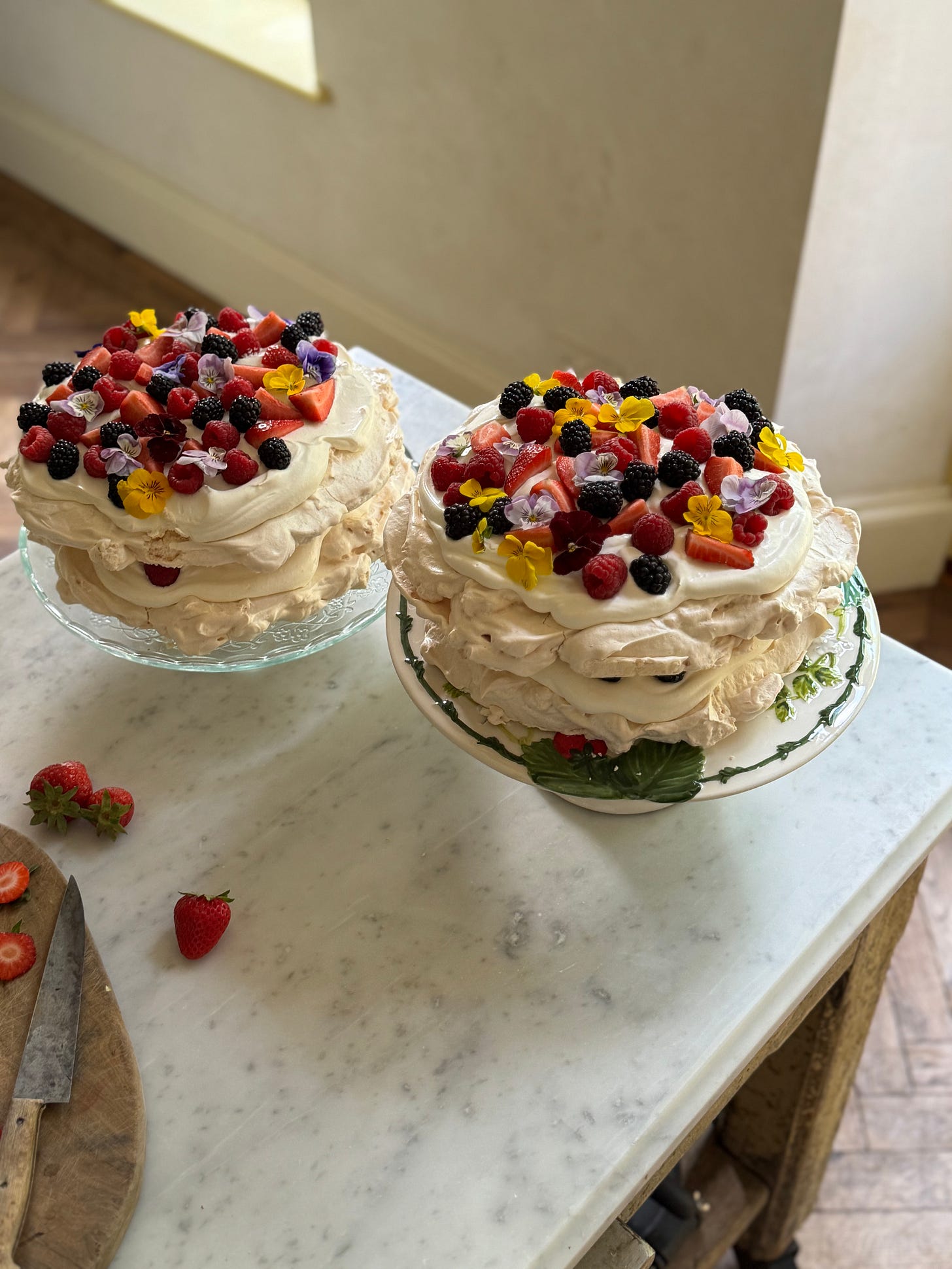
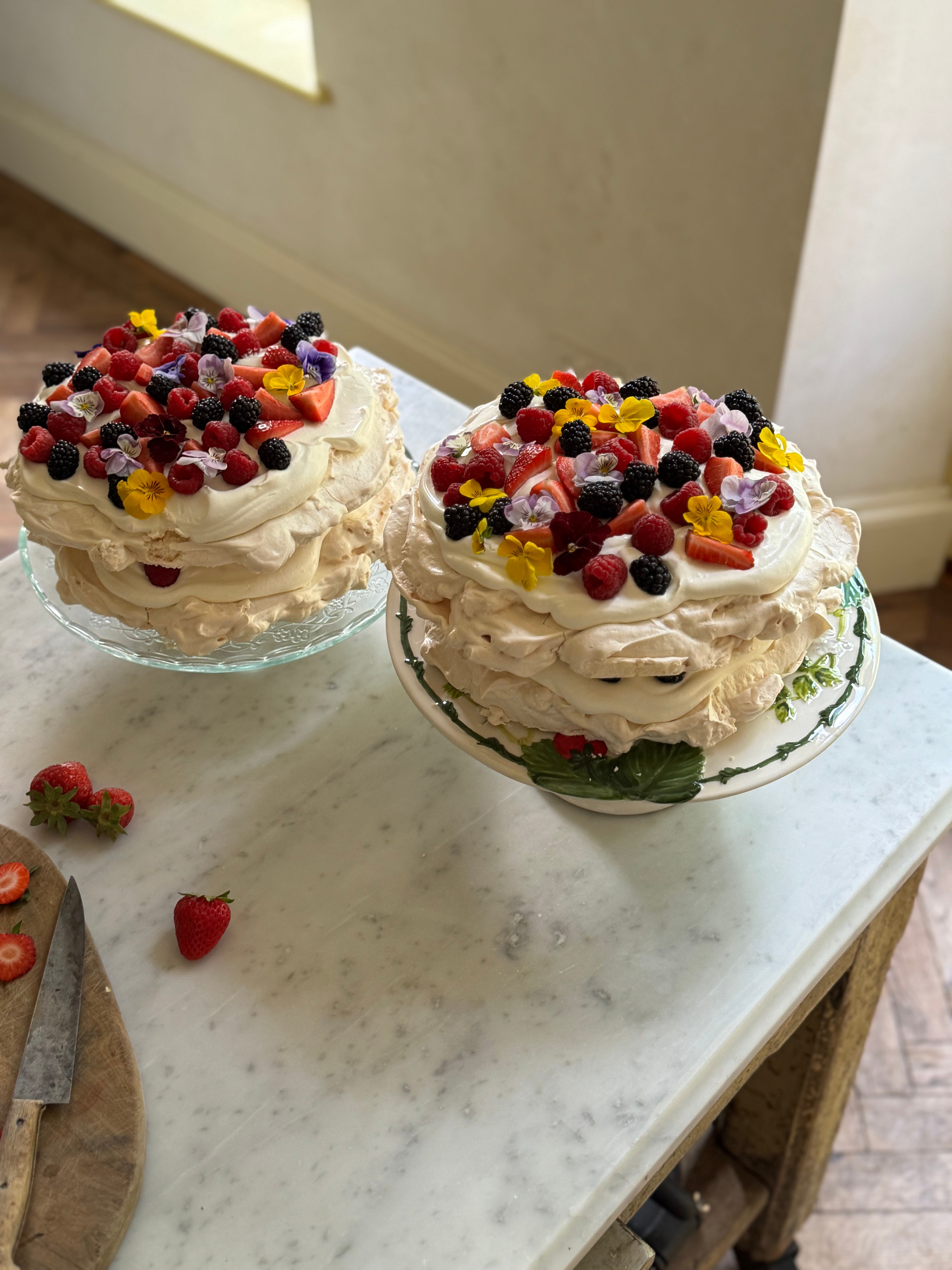
If you’re looking for good gluten free pudding options, then meringue is your friend. Everyone loves meringue, and it doesn’t feel or taste like a lesser gluten-free substitute: it just is generally fabulous. See above (points 9, 10 and 11) for tips to guarantee you perfect meringue every single time; and it you want to make a pudding that is still gluten-free but feels more cake-like then bake three flat tiers of meringue (roughly the shape and size of a cake tin) and layer them up with whipped cream and fruit (or chocolate or whatever you fancy), a bit like this.
Digital scales really are the way forward. I know the old-fashioned scales are much prettier (I’ve been there), but these are nice and small, pack away easily, and are always precise to the very gram.
If you’re looking for a way to zhuzh up more humble baked goods, such as cookies or brownies or the like, then add a little shimmer with a spot of edible gold leaf (which you can buy easily here). So easy to do, so very effective looking
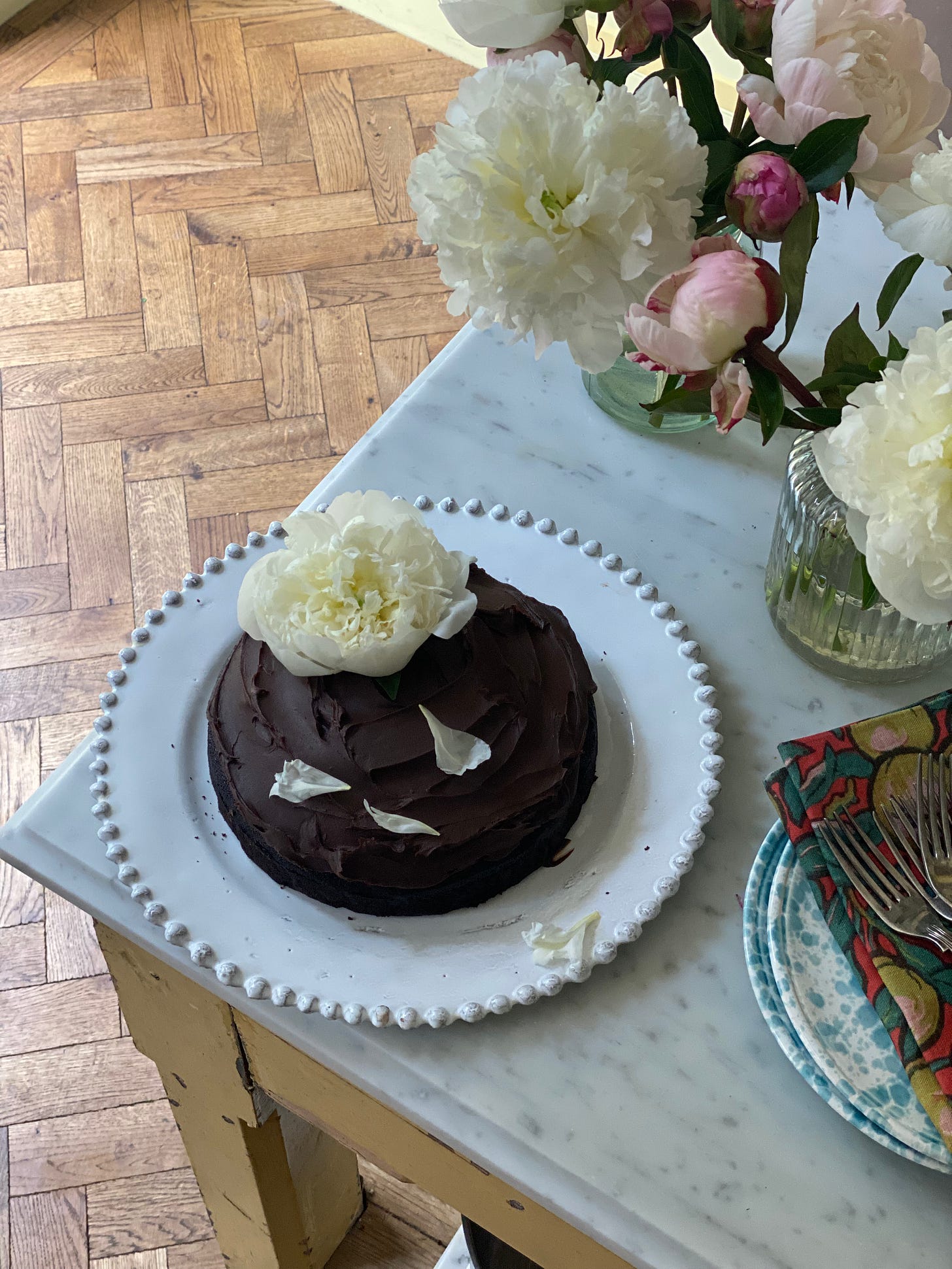
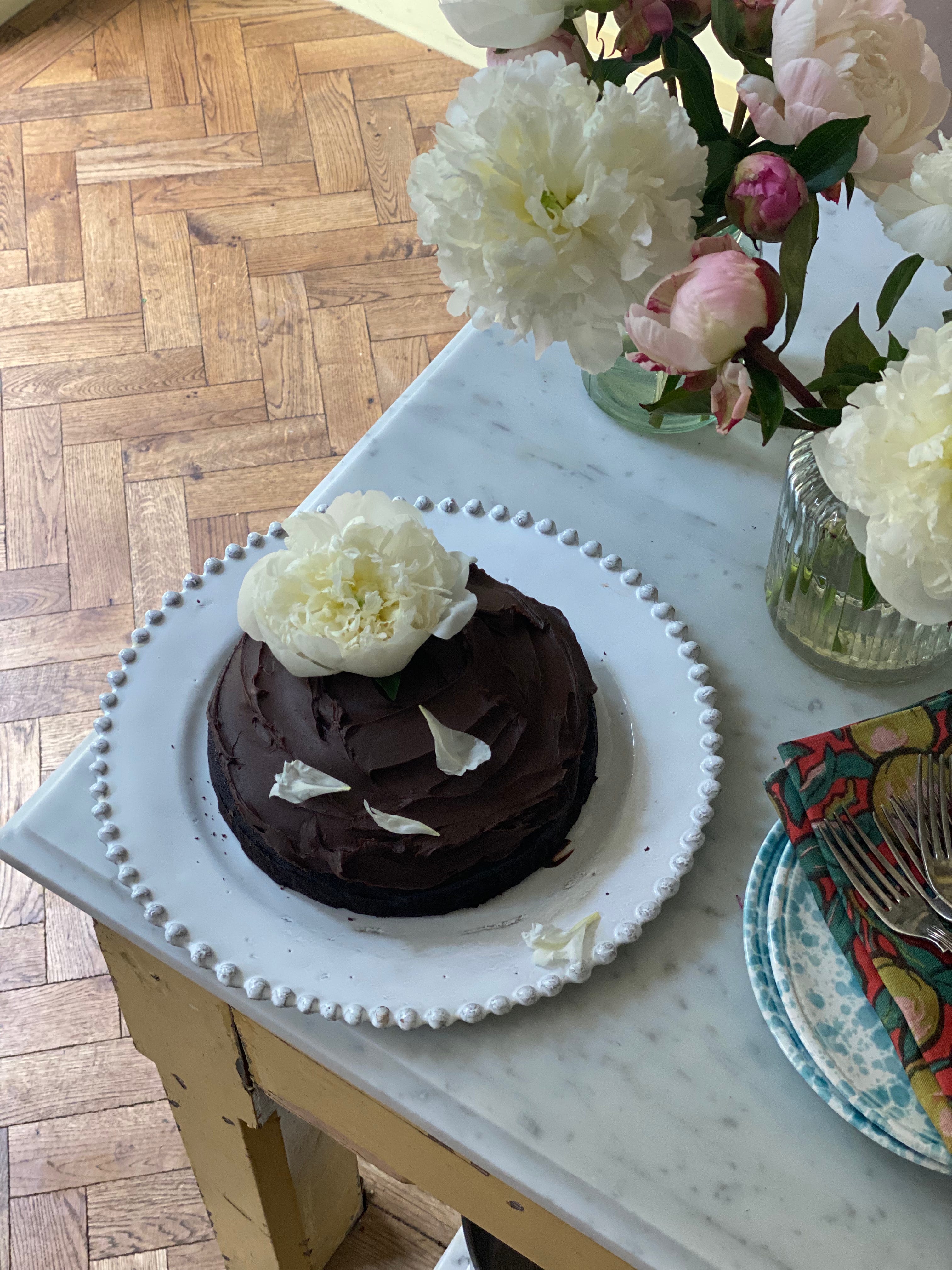
And if you’re looking to zhuzh up a cake, then dress it up with fresh flowers and/or sprinkles.
Treat cookbooks like notebooks: scribble away in there; then next time you turn to that recipe you’ll have all your tweaks/twists/revised quantities right there for your reference.
Drape a slightly damp tea towel over your freestanding mixer to stop icing sugar from flying everywhere when you’re making frosting. Start on a low-ish speed to allow the powdered sugar to incorporate nicely with the butter, then power up the speed for super light and fluffy icing.
If in doubt, there’s always Nigella Lawson’t Chocolate Guinness Cake. This is the perfect cake for all occasions.
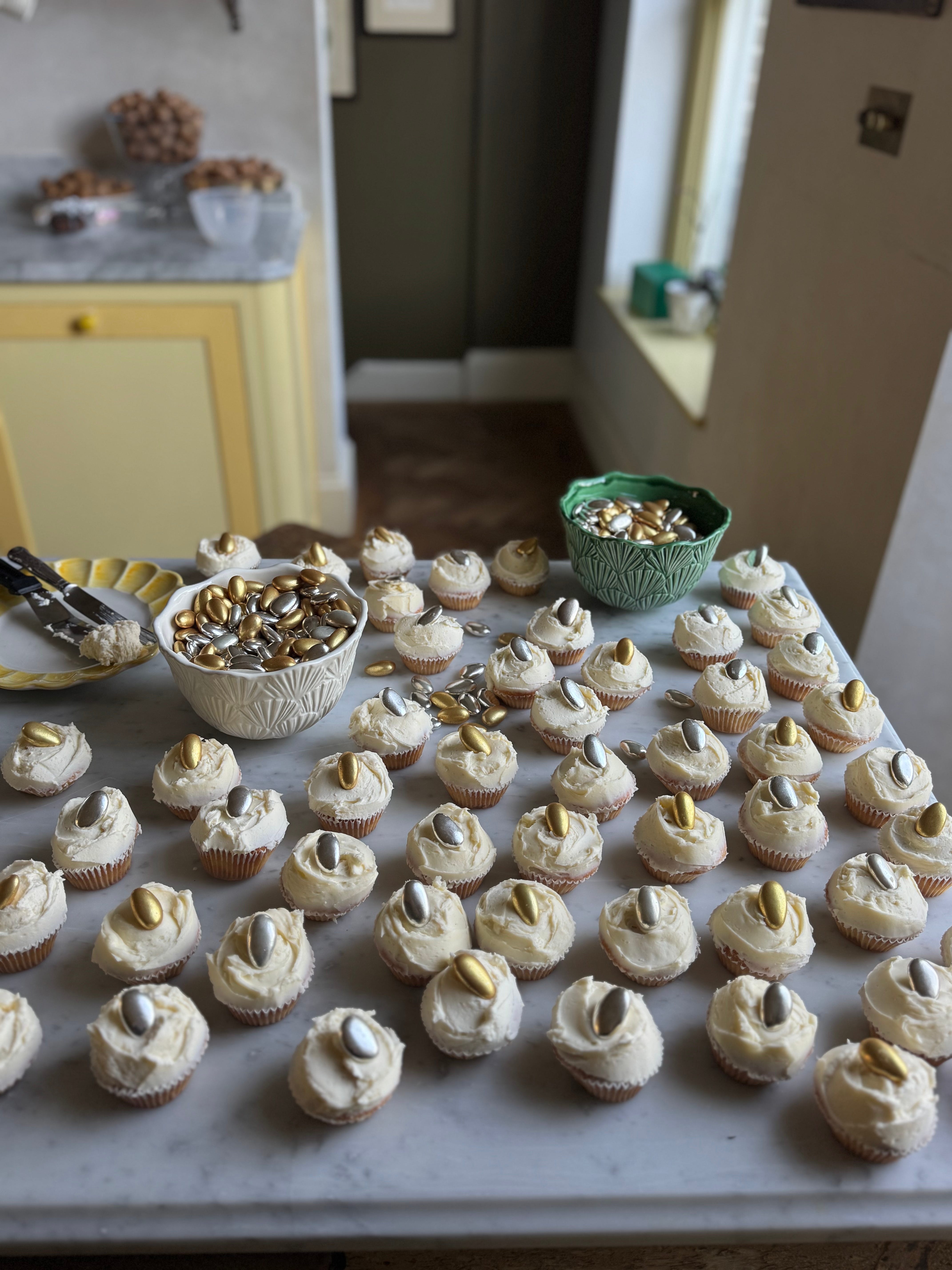
If you’re in hurry then bake cupcakes instead of a single, larger cake: these are ready to come out of the oven within 10-15 minutes.
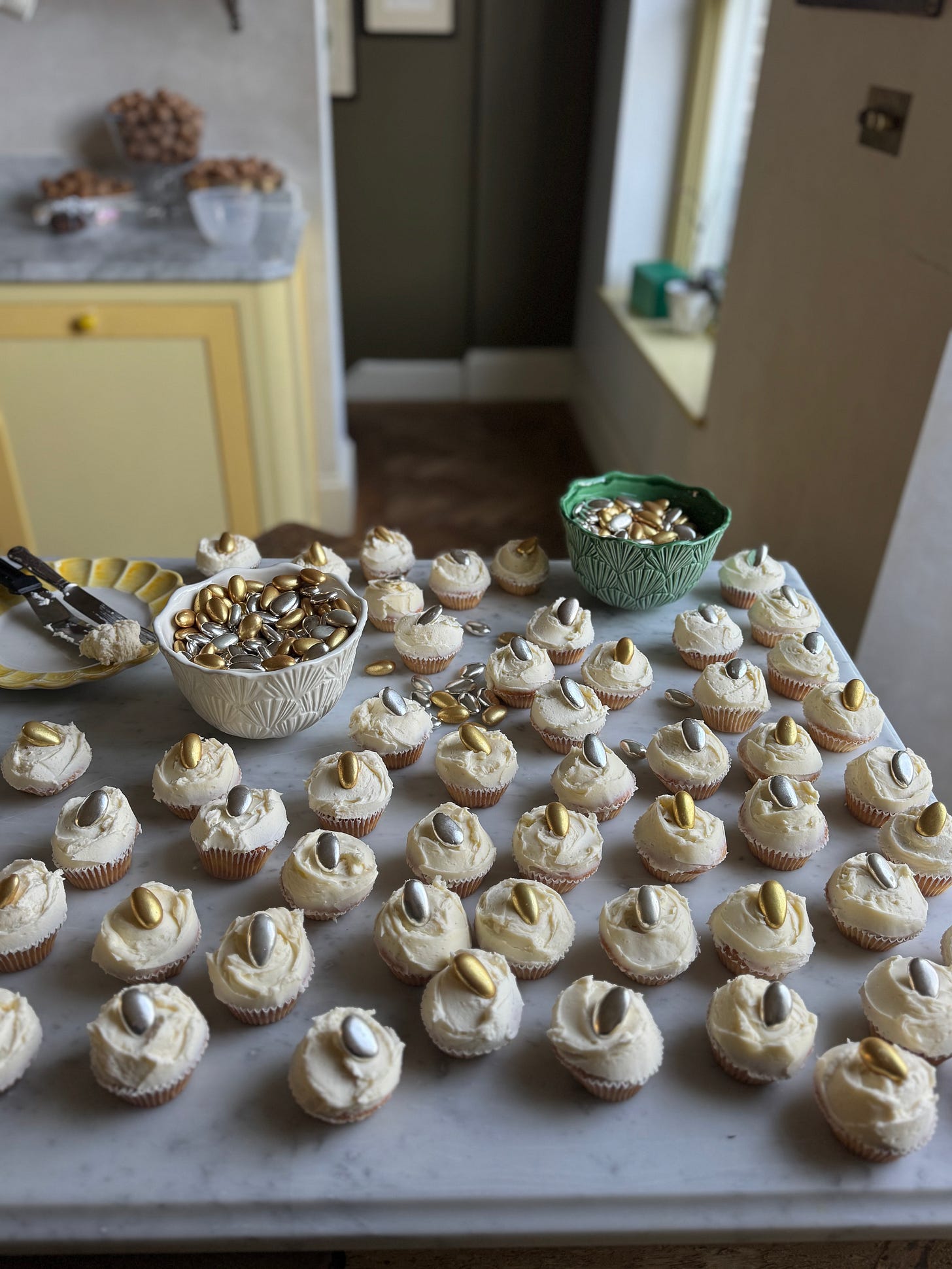
And if you’re in a real mad hurry, then buy ready-made fairy cakes (like these), and add your own icing (shop-bought icing is dire, sorry, there’s no wiggle room there). Then decorate each one with an edible flower, the aforementioned sprinkles or a Marashino cherry. I’ve done this before when I’ve been in a pinch - for school bake sales and the like - and it works a treat.
Pop your cake tin onto a baking tray before you put it in the oven: this helps catch any spillage as it bakes, and saves you having to clean THE WHOLE OVEN.
Use garden secateurs to cut cake dowels. This works so very much better than using scissors.
If you’re baking in a temperamental oven and/or an oven that is new to you, then it’s well worth investing in an oven thermometer - just so you know where you actually stand.
Take comfort in knowledge of the fact that most baking sins and mishaps can be well masked with a healthy does of icing sugar or patched over with more buttercream.
You can use a dried strand of spaghetti in place of a knife to test if your cake is done: the recipe will tell you to use a knife (I will always tell you to use a knife), but a spaghetti strand is much better because it’s super fine and will leave almost no trace on the cake’s surface when you pull it out. You could also use a toothpick, although I find that fiddlier. To be fair, if you’re going to slather the cake in frosting, none of this matters all too much; but if the cake is going naked, then it’s nice for it not to be pockmarked from where you’ve stabbed at it repeatedly with a knife.
If you’re going to bake regularly, it’s worth investing in more than one rubber spatula and at least two bowls for your freestanding mixer (so you can do egg whites in one and yolks in the other). This means that you’re not constantly washing up. And if you make a lot of cakes, you might want to think about multiple cake tins and baking trays.
Re the precut parchment circles, if you make loaf cakes, then get the parchment loaf tin liners, it means you can knock up a lemon drizzle all-in-one loaf cake in moments. And if you end up with lots of egg yolks post meringue/pav, you can either freeze them or make Nigella’s gateau Breton which calls for 6 egg yolks
What a fabulous list for every baker. Thank you!